Prague vs Budapest: Which Should You Visit?
Updated · By Zerzura · Costs and scores are Zerzura estimates · How we estimate
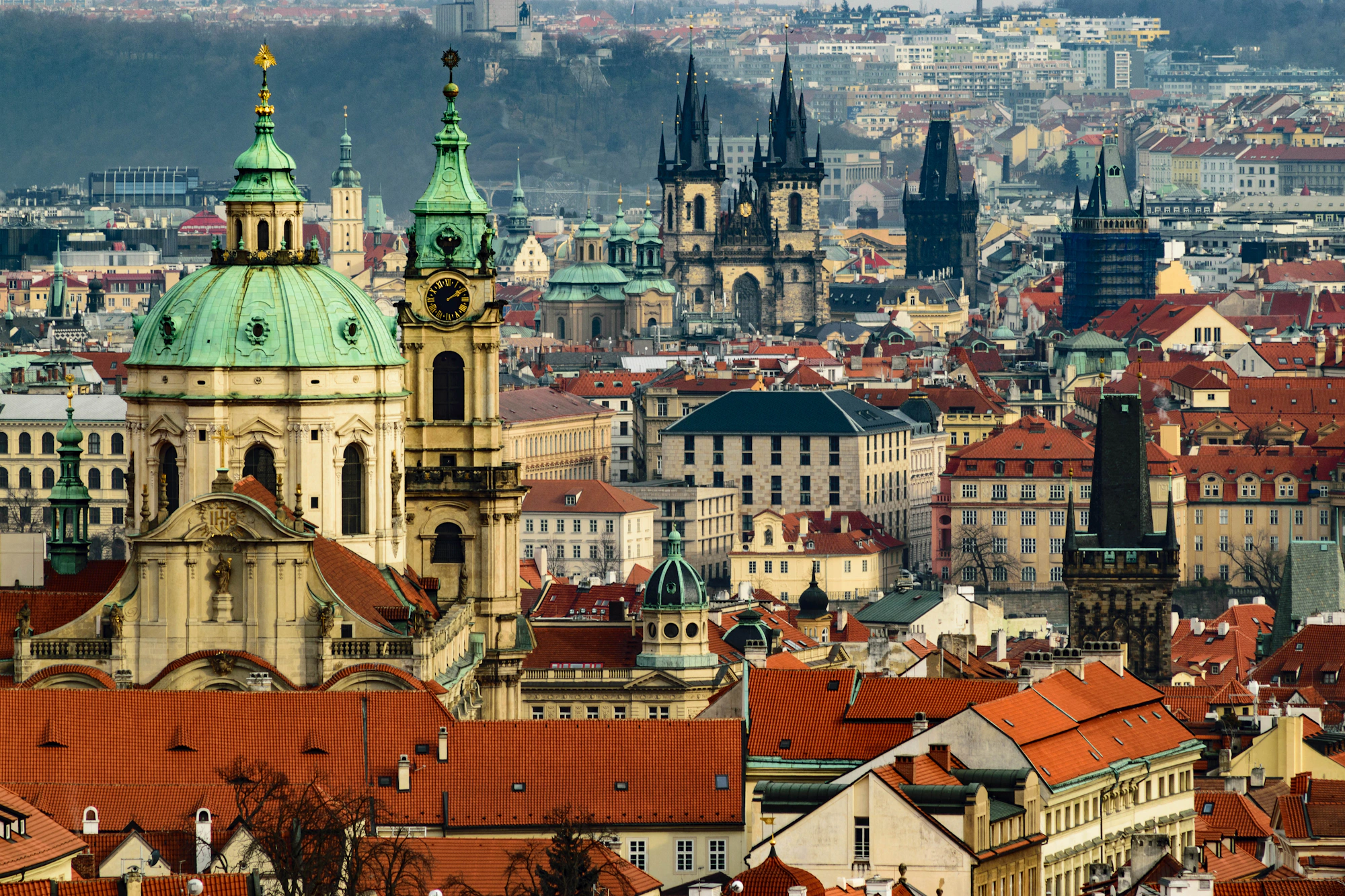
Prague
- Balanced, all-in
- $206 a day
- Official advisory
- Level 1: Normal precautions
- Best months
- May–Sep, Apr–May

Budapest
- Balanced, all-in
- $168 a day
- Official advisory
- Level 1: Normal precautions
- Best months
- Apr–Jun, Sep–Oct
Quick answer: Budapest is cheaper: about $168 a day all-in on a Balanced budget, against $206 in Prague (Prague costs 23% more).
- Biggest difference: Nightlife & Social, Budapest 84 vs 74.
- Prague scores higher for Airport Convenience and Tourist Infrastructure.
- Budapest scores higher for Nightlife & Social and Nature & Outdoor.
- Same official advisory level: Level 1, Normal precautions.
What each costs
| All-in per day (estimate) | Prague | Budapest | Difference |
|---|---|---|---|
| Local (budget) | $112 | $100 | Prague +$12 |
| Balanced (mid-range) | $206 | $168 | Prague +$38 |
| Elevated (comfort) | $508 | $430 | Prague +$78 |
| Stay per night (estimate) | Prague | Budapest | Difference |
|---|---|---|---|
| Local (budget) | $58 | $52 | Prague +$6 |
| Balanced (mid-range) | $108 | $88 | Prague +$20 |
| Elevated (comfort) | $200 | $165 | Prague +$35 |
These are prices for every traveler. With a free account, costs follow your own travel style.
Scores side by side
| Score | Prague | Budapest | Why |
|---|---|---|---|
| Nightlife & Social | 74 | 84 | Prague: Žižkov and Vinohrady offer genuine local bar culture, and the city has a well-known club scene (Cross Club, Hemingway Bar), but it lacks the global nightlife reputation of Berlin or Barcelona and skews heavily toward pub crawls in tourist zones. Budapest: Budapest's ruin bar scene (Szimpla Kert is globally iconic) and the VII District party corridor give it a nightlife identity that punches well above its city size, rivaling Lisbon or Kraków. |
| Nature & Outdoor | 55 | 62 | Prague: Divoká Šárka nature reserve and Prokopské údolí offer pleasant urban escapes, but there are no mountains or coast nearby; Bohemian Switzerland National Park is a 2-hour drive, making dramatic nature a day-trip rather than a quick getaway. Budapest: The Buda Hills offer hiking trails within city limits, and the Danube Bend is a scenic 40-minute day trip, but Budapest lacks dramatic coastal or alpine nature comparable to Vienna's Alpine access. |
| Airport Convenience | 62 | 58 | Prague: Václav Havel Airport is about 17 km from the center with no direct metro or rail link — travelers rely on buses or taxis; Terminal 2 is modern and well-equipped, but the absence of a fast rail connection is a notable gap compared to Amsterdam or Munich. Budapest: Budapest Ferihegy (BUD) is 24 km from center with no direct metro or rail link to downtown; travelers rely on bus 100E or taxis, making transfers slower and less seamless than Amsterdam or Munich. |
| Food Scene | 72 | 76 | Prague: Strong Czech comfort food (svíčková, trdelník, goulash) and a growing international scene, but fine dining depth and diversity lag behind Lisbon or Barcelona; tourist traps around Old Town dilute quality. Budapest: Strong Hungarian classics (goulash, lángos, chimney cake) plus a growing modern bistro scene; the Great Market Hall alone offers excellent local variety, though international diversity lags behind Prague or Vienna. |
| Tourist Infrastructure | 82 | 78 | Prague: Card acceptance is widespread in most restaurants and shops, English menus are near-universal in tourist areas, eSIM works seamlessly, and booking tours/transport is easy — minor friction with some cash-only markets and older local venues. Budapest: English menus and signage are widespread in tourist zones, contactless payment accepted at most restaurants and shops, and eSIM/WiFi is easy to obtain — minor friction remains at smaller markets and some transit machines. |
| Value for Money | 78 | 82 | Prague: Beer is among the cheapest in Europe (under $2.30 for a half-liter of Pilsner Urquell at a local pub), accommodation and meals outside tourist zones are excellent value — though Old Town prices have crept toward Western European levels. Budapest: A three-course dinner with wine at a mid-range restaurant costs roughly $23–35, thermal bath entry is under $29, and hotel quality-to-price ratios rival Lisbon — strong value for a European capital. |
| Culture & History | 88 | 85 | Prague: One of Europe's best-preserved medieval city centers — Prague Castle, Charles Bridge, Old Town Square, and the Jewish Quarter all within walking distance; UNESCO-listed historic core rivals Kraków and Vienna in density of heritage. Budapest: Buda Castle, the Parliament building, Heroes' Square, and a UNESCO-listed riverfront deliver exceptional historical density; the city straddles 2,000 years of Roman, Ottoman, Habsburg, and Communist heritage. |
| Accessibility | 42 | 44 | Prague: The historic cobblestone streets of Staré Město and Malá Strana are extremely difficult for wheelchair users; the metro has elevators at many stations but not all, and the hilly terrain around Prague Castle presents significant mobility challenges. Budapest: The historic metro lines (M1 dates to 1896) have no elevators, cobblestone streets dominate the Castle District, and many key attractions involve significant stairs — accessibility is genuinely poor compared to Berlin or Vienna. |
| Trendsetting | 58 | 60 | Prague: Prague has a respected contemporary art scene (DOX Centre for Contemporary Art) and a growing tech startup ecosystem, but its global cultural footprint in fashion, music, or design remains regional rather than internationally trend-setting. Budapest: Budapest has a recognized design and indie music scene and hosts major festivals like Sziget, but its contemporary cultural export influence remains regional rather than globally trend-setting. |
| Walkability & Transit | 76 | 76 | Prague: The historic core is extremely walkable — Old Town, Malá Strana, and Josefov are all connected on foot — and the metro (3 lines), trams, and buses cover the wider city well; cobblestones and hills reduce pedestrian comfort in some areas. Budapest: The Pest flatlands are highly walkable between major attractions, and the metro/tram network is extensive and cheap; the Buda side requires trams or buses, consistent with the Prague/Budapest tier of good-but-not-world-class walkability. |
Pick Prague or Budapest?
Pick Prague if…
- It leads on Airport Convenience (62 vs 58), Tourist Infrastructure (82 vs 78) and Culture & History (88 vs 85), each by fewer than 10 points.
Pick Budapest if…
- Nightlife & Social matters most (84 vs 74).
- You want to spend less ($168 vs $206 a day).
Scores are the same for everyone. Members also get a fit score that weighs them by what matters to them.
Safety and when to go
| Prague | Budapest | |
|---|---|---|
| Official advisory | Level 1: Normal precautions | Level 1: Normal precautions |
| Issued by | U.S. State Department | U.S. State Department |
| Best months | May–Sep, Apr–May | Apr–Jun, Sep–Oct |
Questions
Is Prague or Budapest better to visit?
It depends on what you want. Prague scores higher for Airport Convenience and Tourist Infrastructure; Budapest scores higher for Nightlife & Social and Nature & Outdoor. Budapest costs less per day.
Is Prague or Budapest more expensive?
Prague is more expensive. A Balanced (mid-range) day costs about $206 all-in in Prague and $168 in Budapest, 23% more, excluding flights.
How much does a week in Prague cost compared with Budapest?
Seven nights at a Balanced style cost about $1,442 in Prague and $1,176 in Budapest, including stays and daily spending but not flights.
Is Prague or Budapest safer?
Both countries have the same official advisory: Level 1 of 4, Normal precautions (U.S. State Department).
Is Prague or Budapest better for food?
Budapest scores higher for Food Scene: 76/100 against 72. Strong Hungarian classics (goulash, lángos, chimney cake) plus a growing modern bistro scene; the Great Market Hall alone offers excellent local variety, though international diversity lags behind Prague or Vienna.
Is Prague or Budapest better for nightlife?
Budapest scores higher for Nightlife & Social: 84/100 against 74. Budapest's ruin bar scene (Szimpla Kert is globally iconic) and the VII District party corridor give it a nightlife identity that punches well above its city size, rivaling Lisbon or Kraków.
Is Prague or Budapest better for culture and history?
Prague scores higher for Culture & History: 88/100 against 85. One of Europe's best-preserved medieval city centers — Prague Castle, Charles Bridge, Old Town Square, and the Jewish Quarter all within walking distance; UNESCO-listed historic core rivals Kraków and Vienna in density of heritage.
Is Prague or Budapest better for nature and the outdoors?
Budapest scores higher for Nature & Outdoor: 62/100 against 55. The Buda Hills offer hiking trails within city limits, and the Danube Bend is a scenic 40-minute day trip, but Budapest lacks dramatic coastal or alpine nature comparable to Vienna's Alpine access.
Is Prague or Budapest better for travelers with limited mobility?
Budapest scores higher for Accessibility: 44/100 against 42. The historic metro lines (M1 dates to 1896) have no elevators, cobblestone streets dominate the Castle District, and many key attractions involve significant stairs — accessibility is genuinely poor compared to Berlin or Vienna.
Is Prague or Budapest easier to get around?
They score the same for Walkability & Transit: 76/100.
When is the best time to visit Prague and Budapest?
For Prague: May–Sep, Apr–May. For Budapest: Apr–Jun, Sep–Oct.
Costs and scores are Zerzura estimates, last updated 1 November 2026. All costs are in U.S. dollars, all-in per day (one night’s stay plus a day’s spending), excluding flights.