Paris vs Barcelona: Which Should You Visit?
Updated · By Zerzura · Costs and scores are Zerzura estimates · How we estimate

Paris
- Balanced, all-in
- $300 a day
- Official advisory
- Level 2: Increased caution
- Best months
- Apr–Jun, Sep–Oct
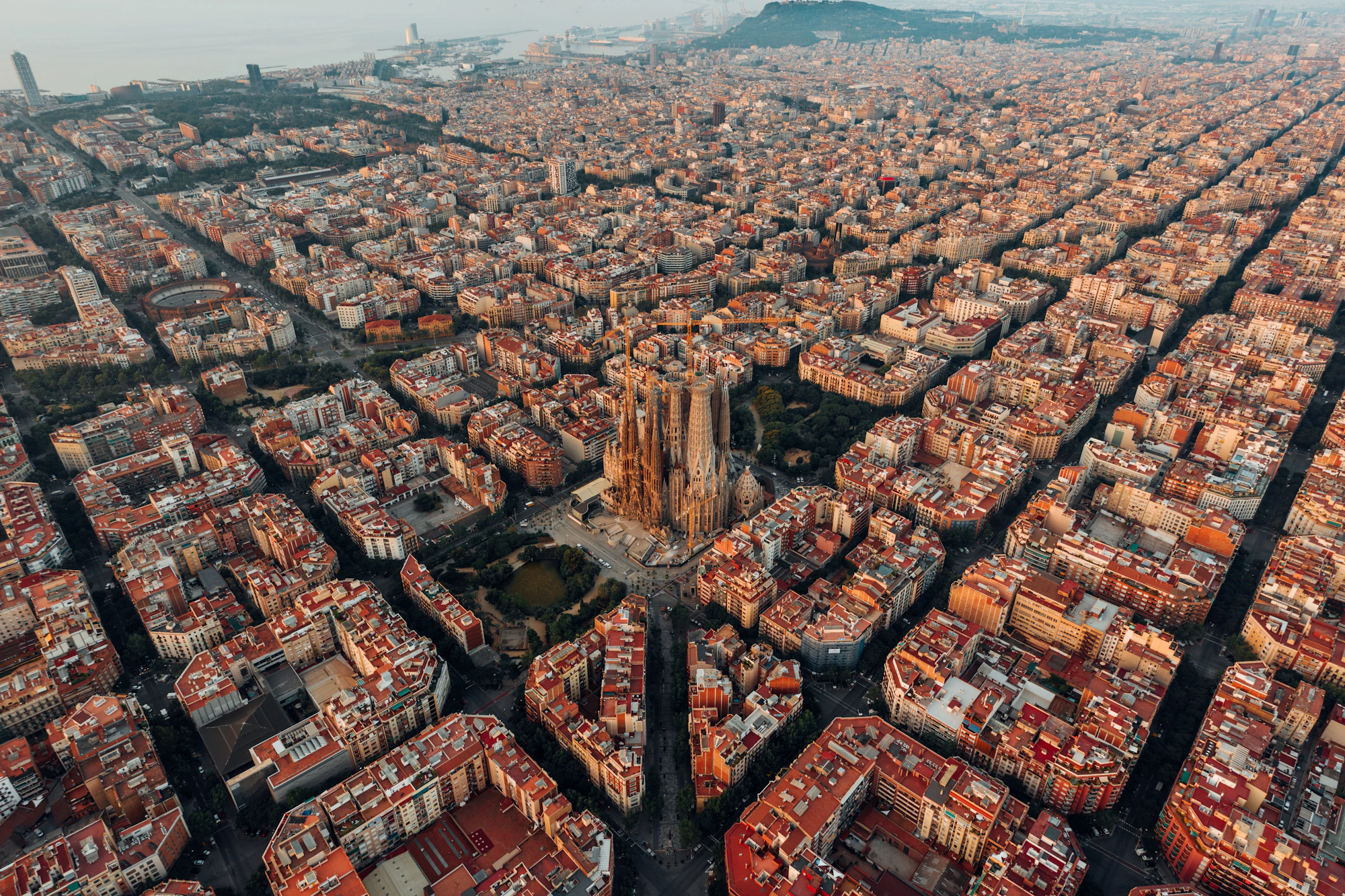
Barcelona
- Balanced, all-in
- $311 a day
- Official advisory
- Level 2: Increased caution
- Best months
- Apr–May, Sep–Oct
Quick answer: Paris is cheaper: about $300 a day all-in on a Balanced budget, against $311 in Barcelona (Barcelona costs 4% more).
- Biggest difference: Nature & Outdoor, Barcelona 78 vs 55.
- Paris scores higher for Culture & History and Trendsetting.
- Barcelona scores higher for Nature & Outdoor and Accessibility.
- Same official advisory level: Level 2, Increased caution.
What each costs
| All-in per day (estimate) | Paris | Barcelona | Difference |
|---|---|---|---|
| Local (budget) | $143 | $148 | Barcelona +$5 |
| Balanced (mid-range) | $300 | $311 | Barcelona +$11 |
| Elevated (comfort) | $782 | $757 | Paris +$25 |
| Stay per night (estimate) | Paris | Barcelona | Difference |
|---|---|---|---|
| Local (budget) | $88 | $99 | Barcelona +$11 |
| Balanced (mid-range) | $175 | $197 | Barcelona +$22 |
| Elevated (comfort) | $332 | $362 | Barcelona +$30 |
These are prices for every traveler. With a free account, costs follow your own travel style.
Scores side by side
| Score | Paris | Barcelona | Why |
|---|---|---|---|
| Nature & Outdoor | 55 | 78 | Paris: Paris has beautiful parks (Bois de Boulogne, Bois de Vincennes, Luxembourg Gardens) but no dramatic nature nearby. Barcelona: City beaches directly accessible from the center, Collserola Natural Park (8,000+ hectares) a short metro ride away, and Montjuïc hill within walking distance — comparable to Rio in having both coast and elevated green space integrated into the urban fabric. |
| Accessibility | 42 | 63 | Paris: Paris's historic Métro is notoriously inaccessible — only Line 14 and a handful of stations are fully step-free. Barcelona: The metro has elevators at most central stations and the city has invested in ramp infrastructure, but the Gothic Quarter's narrow cobblestone streets and uneven surfaces create real challenges — accessible in the Eixample grid, significantly harder in the old town. |
| Culture & History | 97 | 82 | Paris: The Louvre alone holds over 35,000 displayed works; add the Musée d'Orsay, Notre-Dame, Versailles, Sainte-Chapelle, and the Eiffel Tower. Barcelona: Gaudí's UNESCO-listed works (Sagrada Família, Park Güell, Casa Batlló) plus a Gothic Quarter with Roman foundations and the MNAC art museum give Barcelona a distinctive, well-preserved heritage — strong but not at the density of Rome or Athens. |
| Value for Money | 48 | 62 | Paris: Paris is one of Europe's most expensive cities for tourists — a café crème near a major attraction easily costs €5–7, mid-range restaurant meals run €30–50/person, and hotel prices are among the highest in Europe, especially post-2024 Olympics infrastructure investment. Barcelona: Prices have risen sharply post-2022 due to overtourism pressures and short-term rental restrictions driving up hotel costs — a mid-range dinner for two now typically runs €60–90, making it fair value but no longer the bargain it was a decade ago compared to Lisbon. |
| Trendsetting | 93 | 82 | Paris: Paris remains the undisputed global capital of fashion (home to LVMH, Kering, Chanel, Dior headquarters and runway shows), with a thriving contemporary art scene at the Palais de Tokyo and Centre Pompidou, and growing influence in tech and design. Barcelona: A recognized global hub for architecture, design, and fashion (080 Barcelona Fashion Week), home to the Mobile World Congress annually, and a thriving startup ecosystem — strong regional-to-global creative influence comparable to Amsterdam or Milan. |
| Walkability & Transit | 86 | 76 | Paris: Paris is one of the world's most walkable cities — the central arrondissements are compact, flat, and pedestrian-friendly, with major attractions (Louvre to Notre-Dame to Musée d'Orsay) walkable in under 30 minutes. Barcelona: The Eixample grid and La Rambla corridor are highly walkable, and the metro covers the city well with 12 lines. |
| Food Scene | 96 | 88 | Paris: Paris defines fine dining globally — home to more Michelin-starred restaurants than almost any city, plus exceptional bistros, boulangeries, fromageries, and a thriving immigrant food scene (Vietnamese, North African, Lebanese) across all price points. Barcelona: World-class tapas, seafood, and Catalan cuisine with a thriving market culture (La Boqueria, Mercat de Santa Caterina) and multiple Michelin-starred restaurants — sits firmly in the 'excellent, distinctive' tier alongside Istanbul and Mexico City. |
| Nightlife & Social | 80 | 85 | Paris: Paris has a vibrant, varied nightlife — legendary jazz clubs, wine bars, rooftop terraces, and a strong electronic music scene centered on venues like Rex Club and Concrete. Barcelona: Globally recognized club scene (Razzmatazz, Pacha, Opium) with nightlife that routinely runs until 6am, a dense bar culture across El Born, Gràcia, and Barceloneta — consistently ranked among Europe's top nightlife cities. |
| Airport Convenience | 72 | 68 | Paris: CDG is 25 km from central Paris with the reliable RER B rail link (~50 min, ~€11.80), but the RER B is aging, occasionally unreliable, and the journey involves multiple connections. Barcelona: El Prat is 14km from center with the Aerobus as the main reliable link (35 min, €6.75) and taxis/rideshare available, but the lack of a direct metro or fast rail connection to the city center is a notable gap compared to Amsterdam Schiphol or Madrid Barajas; terminal facilities are modern and well-equipped. |
| Tourist Infrastructure | 82 | 82 | Paris: Contactless payment widely accepted in most shops and restaurants; English menus common in tourist areas; eSIM and WiFi broadly available. Barcelona: Contactless payment widely accepted in most restaurants and shops, strong English-language menus in tourist zones, good eSIM/WiFi availability, and Uber operates alongside taxis — minor friction in smaller local bars that still prefer cash. |
Pick Paris or Barcelona?
Pick Paris if…
- Culture & History matters most (97 vs 82).
- Trendsetting matters most (93 vs 82).
- Walkability & Transit matters most (86 vs 76).
Pick Barcelona if…
- Nature & Outdoor matters most (78 vs 55).
- Accessibility matters most (63 vs 42).
- Value for Money matters most (62 vs 48).
Scores are the same for everyone. Members also get a fit score that weighs them by what matters to them.
Safety and when to go
| Paris | Barcelona | |
|---|---|---|
| Official advisory | Level 2: Increased caution | Level 2: Increased caution |
| Issued by | U.S. State Department | U.S. State Department |
| Best months | Apr–Jun, Sep–Oct | Apr–May, Sep–Oct |
Questions
Is Paris or Barcelona better to visit?
It depends on what you want. Paris scores higher for Culture & History and Trendsetting; Barcelona scores higher for Nature & Outdoor and Accessibility. Paris costs less per day.
Is Paris or Barcelona more expensive?
Barcelona is more expensive. A Balanced (mid-range) day costs about $311 all-in in Barcelona and $300 in Paris, 4% more, excluding flights.
How much does a week in Paris cost compared with Barcelona?
Seven nights at a Balanced style cost about $2,100 in Paris and $2,177 in Barcelona, including stays and daily spending but not flights.
Is Paris or Barcelona safer?
Both countries have the same official advisory: Level 2 of 4, Increased caution (U.S. State Department).
Is Paris or Barcelona better for food?
Paris scores higher for Food Scene: 96/100 against 88. Paris defines fine dining globally — home to more Michelin-starred restaurants than almost any city, plus exceptional bistros, boulangeries, fromageries, and a thriving immigrant food scene (Vietnamese, North African, Lebanese) across all price points.
Is Paris or Barcelona better for nightlife?
Barcelona scores higher for Nightlife & Social: 85/100 against 80. Globally recognized club scene (Razzmatazz, Pacha, Opium) with nightlife that routinely runs until 6am, a dense bar culture across El Born, Gràcia, and Barceloneta — consistently ranked among Europe's top nightlife cities.
Is Paris or Barcelona better for culture and history?
Paris scores higher for Culture & History: 97/100 against 82. The Louvre alone holds over 35,000 displayed works; add the Musée d'Orsay, Notre-Dame, Versailles, Sainte-Chapelle, and the Eiffel Tower.
Is Paris or Barcelona better for nature and the outdoors?
Barcelona scores higher for Nature & Outdoor: 78/100 against 55. City beaches directly accessible from the center, Collserola Natural Park (8,000+ hectares) a short metro ride away, and Montjuïc hill within walking distance — comparable to Rio in having both coast and elevated green space integrated into the urban fabric.
Is Paris or Barcelona better for travelers with limited mobility?
Barcelona scores higher for Accessibility: 63/100 against 42. The metro has elevators at most central stations and the city has invested in ramp infrastructure, but the Gothic Quarter's narrow cobblestone streets and uneven surfaces create real challenges — accessible in the Eixample grid, significantly harder in the old town.
Is Paris or Barcelona easier to get around?
Paris scores higher for Walkability & Transit: 86/100 against 76. Paris is one of the world's most walkable cities — the central arrondissements are compact, flat, and pedestrian-friendly, with major attractions (Louvre to Notre-Dame to Musée d'Orsay) walkable in under 30 minutes.
When is the best time to visit Paris and Barcelona?
For Paris: Apr–Jun, Sep–Oct. For Barcelona: Apr–May, Sep–Oct.
Costs and scores are Zerzura estimates, last updated 21 November 2026. All costs are in U.S. dollars, all-in per day (one night’s stay plus a day’s spending), excluding flights.